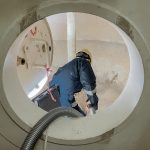


Across Australia’s manufacturing plants, refineries, processing hubs, and mining facilities, industrial maintenance was once viewed simply as a necessary, manual chore. Teams of specialised technicians routinely faced high-risk environments, entering confined tanks, scaling high-elevation structures, or manually wielding high-pressure water lances to clear heavy slag, chemical residue, and industrial scale.
However, as operational efficiency mandates tighten and workplace health and safety (WHS) regulations become increasingly stringent, legacy cleaning methods are proving too slow, labour-intensive, and hazardous. Every hour a manufacturing line sits idle for manual scrubbing or a processing vessel remains off-line during maintenance represents significant lost revenue.
Enter smart cleaning technologies. The integration of advanced robotics, ultra-high-pressure (UHP) water jetting systems, automated vacuum loading, and telemetry-driven monitoring is fundamentally redefining modern industrial cleaning services.
Rather than relying purely on manual labour, forward-thinking facility managers are adopting smart, technology-driven maintenance solutions to boost site safety, protect mechanical infrastructure, and drastically reduce costly operational downtime.
At Silver Raven, we stand at the forefront of this industrial transformation. Combining specialised engineering expertise with state-of-the-art equipment, we deliver high-performance cleaning solutions tailored to Australia’s most demanding industrial sectors.
Remote-Controlled Robotics: Eliminating Confined Space Risks
Perhaps the single most transformative leap in modern facility maintenance is the deployment of magnetic crawlers, remote-controlled demolition robots, and automated tank-cleaning systems.
Historically, cleaning chemical storage vessels, crude tanks, or large-diameter pipelines required human operators to physically enter confined spaces. These environments pose severe risks, including toxic vapour exposure, low oxygen levels, and structural collapses.
By replacing manual entry with specialised robotic crawlers, facility managers can achieve non-man entry tank cleaning. Controlled safely by experienced technicians from an external command rig, these magnetic crawlers navigate vertical steel walls, dome roofs, and curved pipework. Equipped with high-definition cameras, ultrasonic thickness sensors, and high-pressure cleaning heads, they strip stubborn sludge and scale without placing a single worker in harm’s way.
Key WHS Impact: Non-man entry robotic systems eliminate up to 90% of confined-space entry hours during major industrial shutdowns, significantly lowering site risk profiles and insurance liabilities.
Ultra-High-Pressure (UHP) Water Jetting Precision
Water jetting has long been a staple of industrial cleaning, but smart control systems and precision tooling have taken its capabilities to a new level. Modern UHP systems operate at extreme pressures exceeding 40,000 PSI (2,750 bar), using targeted kinetic energy rather than harsh chemical solvents to strip contaminants.
Precision Automated Lancing
Manual water jetting subjects operators to intense physical fatigue and reaction forces. Modern smart systems utilise automated 2-axis and 3-axis tube-bundle lancing rigs. These automated positioners drive water nozzles smoothly through heat exchanger tubes, boilers, and condensers at precise speeds, ensuring consistent cleaning thoroughness across every single tube internal while protecting the base metallurgy from gouging.
Surface Preparation and Paint Removal
Smart UHP hydrodemolition and surface preparation systems remove industrial coatings, rust, and stubborn rubber linings without producing dust clouds or sparks. This cold-cutting capability makes UHP water jetting the ideal solution for volatile environments where hot-work permits or abrasive sandblasting are strictly restricted.
High-CFM Vacuum Loading and Closed-Loop Recovery
Lifting and transporting heavy sludge, dry catalysts, ash, and contaminated liquid waste out of deep pits or processing towers was once a major site bottleneck. Smart industrial cleaning services now integrate heavy-duty vacuum loading technology featuring real-time flow monitoring and closed-loop environmental filtration.
High-cubic-feet-per-minute (CFM) vacuum loaders can pull heavy slurries and dense solids across horizontal distances of several hundred metres and out of deep subterranean vaults. Smart filtration units separate volatile organic compounds (VOCs) and fine particulate dust before venting, ensuring site emissions remain fully compliant with state Environmental Protection Authority (EPA) guidelines.
Comparing Traditional Maintenance with Smart Cleaning Solutions
| Feature | Traditional Manual Cleaning | Smart Industrial Cleaning |
| Confined Space Exposure | High (Requires physical crew entry) | Near-Zero (Utilizes remote robotic crawlers) |
| Outage & Downtime Duration | Extended (Labour-restricted speeds) | Up to 50% Faster (Continuous automated systems) |
| Cleaning Consistency | Variable (Operator fatigue dependent) | Highly Uniform (Robotic precision & speed control) |
| Environmental Compliance | Higher risk of runoff or dust drift | Closed-loop filtration & containment |
Partnering with Silver Raven for Next-Generation Services
Adopting smart cleaning technologies requires more than just buying advanced machinery; it demands specialised engineering expertise, rigorous safety protocols, and experienced operators who understand complex industrial environments.
At Silver Raven, we bring decades of practical experience across civil infrastructure, energy, mining, and manufacturing sectors. We invest heavily in cutting-edge robotic systems, UHP water-jetting technology, and vacuum-loading fleets to deliver bespoke cleaning frameworks tailored to your facility’s unique operational requirements.
Whether you are planning a major plant shutdown, tackling a high-risk tank cleaning project, or looking to streamline your routine facility maintenance, our engineering-led team delivers safe, compliant, and cost-effective outcomes.